
How to Charge an EV at Home Without a Garage in Newport Beach
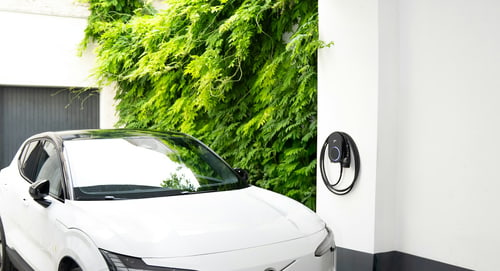
Plenty of Newport Beach homes were never built with EV charging in mind. The cottages on Balboa Island sit on narrow lots with alley access and no garage at all, Lido Isle and the Balboa Peninsula are full of houses that park in a carport or a short driveway, and condos near Newport Center share open lots. If you just bought an electric car and your first thought was that charging an EV without a garage is impossible, it is not. Homeowners and renters with only a driveway, a carport, or an exterior wall can charge at home every night with the right outdoor-rated equipment and a proper circuit. This guide walks through exactly how it works in Newport Beach.
You Don't Need a Garage to Charge an EV at Home
You do not need a garage to charge an EV at home; a weather-protected charger on an outside wall or post works just as well. The U.S. Department of Energy notes that residential charging equipment is frequently installed in garages, but outdoor installation and use are also safe when the equipment is rated for it. That single fact reframes the whole problem for a no-garage home: the charger does not care whether a roof and four walls surround it, only that it is mounted on something solid, wired to a dedicated circuit, and shielded from direct weather. In Newport Beach that usually means an exterior stucco wall beside the driveway, a carport support post, or a freestanding pedestal next to the parking pad. The driving habit is identical to a garage setup. You pull in at night, plug in, and wake up to a full battery, whether the charger hangs in a two-car garage in Newport Heights or on the alley-side wall of a Balboa Island cottage.
Where You Can Mount a Charger When There Is No Garage
The best mounting spot is the solid surface closest to where the car parks: an exterior house wall, a carport post, or a dedicated pedestal. Most Level 2 units are built for this. The Tesla Wall Connector's design allows for indoor or outdoor mounting and delivers up to 11.5 kW at 48 amps, and competing wall-mounted chargers are built the same way. For a driveway, the simplest option is bolting the unit to the stucco or siding right where the circuit exits the wall, with the cable reaching the car's charge port. When the parking pad sits away from any wall, a short metal pedestal or a treated post set in concrete gives the charger a home. Keep the mounting height around 48 inches so the cable drapes cleanly and the connector stays off the ground and out of standing water.
Carports Make an Easy Charging Spot
Carports deserve special mention because so many Newport Beach cottages and peninsula homes have one instead of a garage. The existing roof already shelters the charger from direct sun and rain, the support posts give a ready mounting surface, and the open sides keep the connector easy to reach. In practice a carport install often lands between a garage job and a fully exposed driveway job in both effort and cost. If your carport post sits close to the electrical panel, it can be one of the simplest no-garage setups there is.
Outdoor-Rated Equipment and Weather Protection Near the Coast
Outdoor charging comes down to using equipment rated for the elements and protecting the connections. Hardwired Level 2 chargers with a sealed, weather-resistant enclosure are the cleanest choice for an exposed driveway or carport, which is why many no-garage installs use a hardwired EV charger installation rather than a plug-in unit. If you prefer a plug-in charger, the outdoor receptacle it uses must be a weather-resistant outlet inside an in-use cover with GFCI protection, the same hardware code requires for any exterior 240-volt outlet; a professional NEMA 14-50 outlet installation handles that detail. Newport Beach adds one local wrinkle: the marine layer and salt air. Equipment within a mile or two of the water sees more corrosion than an inland install, so stainless hardware, a sealed enclosure, and a connector holster that keeps the plug out of the weather all matter more here than they would farther inland.
A plug-in charger left on an unprotected exterior outlet is the most common no-garage mistake. Water intrusion and corrosion at a 240-volt connection are exactly what weather-resistant outlets and in-use covers exist to prevent.
Running Power From the Panel to a Driveway or Carport
Getting a charger onto an outside wall means running a dedicated 240-volt circuit from your electrical panel to that spot, and the route is what drives the labor. When the panel is on the same wall as the parking area, an electrician can often punch straight through and mount the charger a few feet away, which keeps the job short. When the parking pad or carport sits across the property, the circuit travels in conduit along the exterior, through an attic, or underground in a trench to reach a detached pedestal. Longer runs need a heavier wire gauge to handle voltage drop, so distance affects both the material cost and the breaker sizing. This is also the moment an older home's panel gets tested: a 48-amp charger is a large continuous load, and many Newport Beach houses need an electrical panel upgrade before a dedicated circuit will fit. A site visit is the only way to price a run honestly, because no two no-garage layouts are the same.
When There Is No Off-Street Parking at All
Some Newport Beach homes have no driveway or carport, only street or alley parking, and that is the one case where home Level 2 charging may not be possible. Running a cord across a public sidewalk to a curbside car is both a trip hazard and generally against code, so these homeowners lean on three other options. First, Level 1 charging from a weather-protected exterior 120-volt outlet adds range slowly but can cover a short Newport Beach commute if the car sits overnight. Second, workplace and public Level 2 stations around Fashion Island, Newport Center, and the Balboa Peninsula fill the gap for daily driving. Third, if you have any private off-street space at all, even a single alley-side pad on Balboa Island, a compact pedestal-mounted charger can often be fitted where a wall unit cannot. The right answer depends on how far you drive and where the car actually sleeps, which is worth mapping before you buy any equipment.
What It Costs and How to Charge Cheaply Without a Garage
A no-garage Level 2 install usually costs more than a simple in-garage job because of the conduit run and the weatherproofing, with industry sources putting most residential installations somewhere from several hundred to a few thousand dollars depending on distance and panel work. The charging itself, though, can be very cheap if you time it. Southern California Edison, the utility for Newport Beach, prices its TOU-D-PRIME EV rate plan so that home charging is cheapest between 8 a.m. and 4 p.m. and most expensive from 4 p.m. to 9 p.m. An outdoor charger with a scheduling feature, or the car's own charge timer, lets a driveway or carport setup soak up those low-cost hours automatically. Pairing the right Level 2 charger installation with a smart schedule means a no-garage home charges for roughly the same cost as one with a three-car garage.
Making a No-Garage Charger Work for Your Home
The path depends on where your car parks. A driveway or carport beside the house is the easy case: an outdoor-rated Level 2 charger on the exterior wall behaves exactly like a garage unit. A detached pad calls for a pedestal and a longer conduit run, and a street-only home leans on Level 1, a small off-street pedestal, or public charging nearby. Before buying anything, confirm two things: that your parking spot has a solid mounting surface within reach of the panel, and that the panel has room for a 240-volt circuit. If you are weighing a driveway or carport setup and want it done to code for coastal conditions, the team at Newport Beach EV Charger can look at your parking, your panel, and your car and lay out the cleanest option.
Have a driveway, carport, or alley pad in Newport Beach and want it charging-ready? A licensed EV specialist can map the circuit and quote the job from your parking spot and your panel.
Instant QuoteCharge at Home, Garage or Not
Newport Beach EV Charger installs outdoor-rated Level 2 chargers on driveways, carports, and exterior walls, wired to code and built to stand up to coastal conditions.